
Basement insulation in Santa Rosa CA - a warmer basement with dry walls
Cold, clammy basement with damp concrete walls? We sort out any water first, then insulate with a material that holds up against the damp.
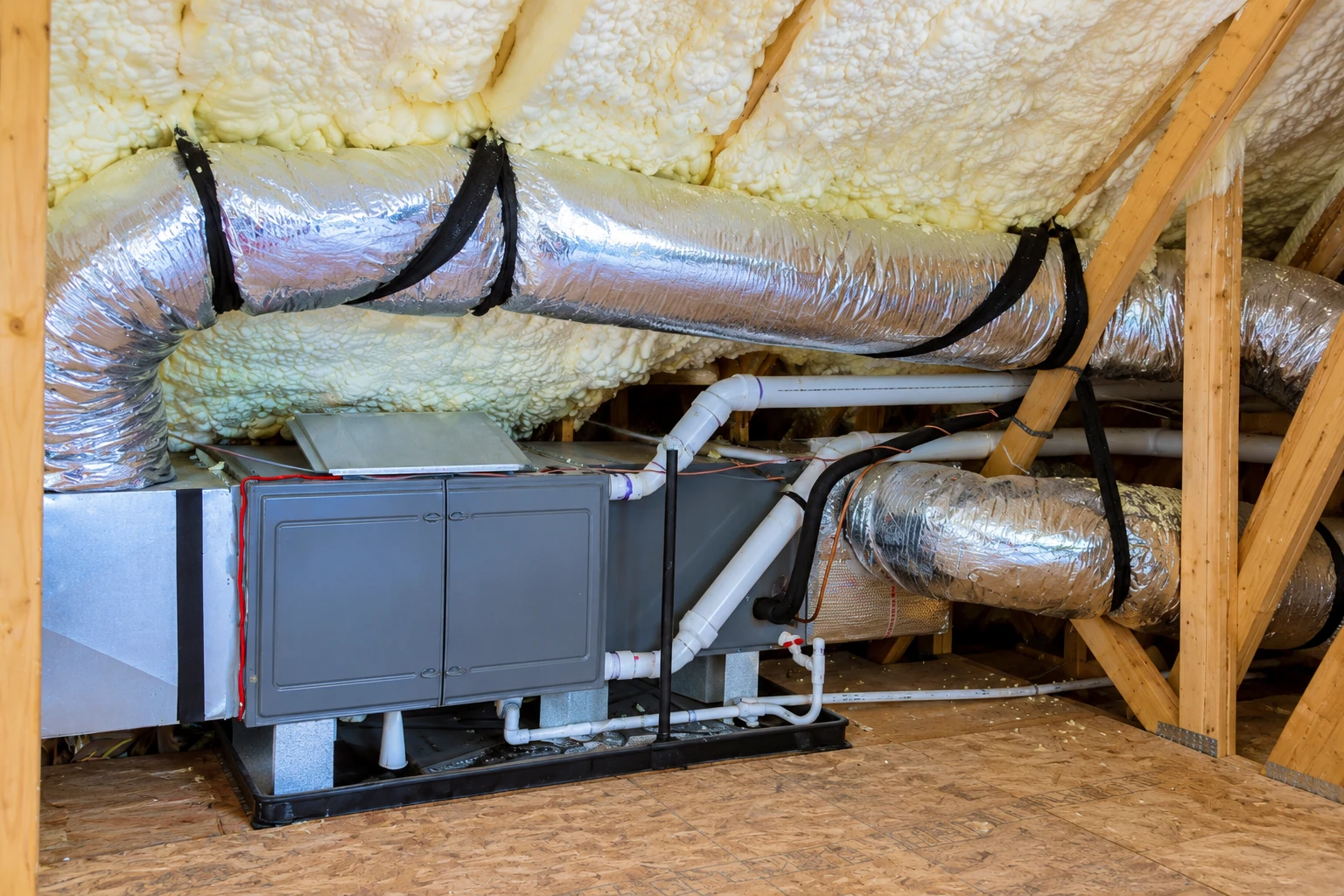
What does it take to insulate a basement in Santa Rosa?
Basement insulation in Santa Rosa means putting insulation on the inside of your foundation walls, usually foam board or spray foam, so the space under your house holds its temperature and stays quieter. The insulation itself is the straightforward part. Most of the planning goes into making sure the walls are dry before anything covers them.
Most people who call me about a basement mention cold floors upstairs, a musty smell or a room they'd like to use that never feels right. The price moves with the wall area in square feet, whether water is getting through the concrete and has to be fixed first, the material that suits your walls and what has to cover it afterward. The schedule mostly turns on that water repair and on any permit and inspections, so I'd rather see the walls before giving you a figure. If the cold is coming up through a floor over dirt rather than through a basement wall, that's crawl space insulation, which is a different job.
How we handle basement insulation, in order
I start by walking the basement with a flashlight and looking for stains, a white crust on the concrete or wet spots along the floor. If water is coming through a wall, we work out that fix with you before anything else goes up, because insulation over a leak only hides it until the wall goes bad. Once the walls are dry, our crew seals the openings where pipes, wires and vents pass through the foundation, so the new insulation isn't fighting a draft. Then we put up a material that holds up against damp concrete, either foam boards fitted tight to the wall with every seam taped or foam sprayed right onto it. Before we call it done, we cover any foam with drywall or a fire-rated paint, clean up and walk you along the finished wall.
Most of our basement walls get closed-cell foam insulation, the dense kind that also blocks moisture, because it suits concrete that runs cool and damp. Open-cell foam insulation is softer and seals air well, but on a below-grade wall it has to go on much thicker to keep vapor out, so I usually suggest it for other parts of the house.
Why Santa Rosa homeowners call D&R Santa Rosa Spray Foam Insulation for basement insulation
I inspect every basement myself
I come out to look at your basement before we quote, and on install day our crew does the work with me running it on site. The person who spotted the damp corner is the one making sure it gets handled.
Trained on municipal building jobs
I started this business in 2023 after years on a municipal crew insulating and air sealing city buildings. That's where I learned to work in order, write everything down and get each job past an inspector.
Permits applied for and inspected
When a Santa Rosa basement job needs a permit, we apply for it, set up the inspections and give you a copy of the paperwork for your records. You don't have to sort out the city's process on your own.
Licensed and insured on every job
We're licensed and insured, so the risk of the work in your basement isn't sitting with you. Every job is backed by our satisfaction guarantee.
On a basement, the order is what matters most. Water comes first, then sealing, then insulation. If you'd like me to look at yours, call (707) 508-4085 or send us a message, and have a rough wall area in square feet and any signs of water ready.
Get a basement insulation estimate at your house
We reply within one business day to set a time for me to come out and look at your basement walls. The estimate is free, done on site, and there's no obligation to go ahead. If you know the rough wall area or have seen water coming in, mention it so I know what to look for.
Basement wall insulation up close
Questions before you insulate a basement
How much does basement insulation cost in Santa Rosa?
Across the US, insulating a basement usually costs about $4.50 to $6 per square foot. That's the going rate for the insulation work in general, not a quote from us. A water repair, rough concrete or drywall to cover foam adds to the work, and a small, dry, open basement tends to come in lower. Your own number comes once I've seen the walls.
Do I need a permit to insulate a basement in Santa Rosa?
Plan on it, because the City of Santa Rosa requires a building permit unless the California Building Code expressly exempts the work. If your job needs one, we handle the application and inspections, as mentioned above.
What is the best insulation for damp basement walls?
Federal guidance rates closed-cell spray foam as the best moisture control of the insulations that go on the inside of a foundation wall, while fiberglass or cellulose against concrete can soak up moisture and stay damp. Rigid foam boards also work when they're bonded tight to the wall with no air gaps behind them and every seam sealed. Closed-cell costs more, and on rough or damp concrete that's where I'd spend the money. On a flat, dry wall, well-sealed boards usually do the job.
How do I keep moisture from getting trapped inside a finished basement wall?
Keep plastic sheeting and foil-faced boards off the room side of fiberglass or any other fibrous insulation, because federal guidance says they can trap moisture inside the wall. For below-grade walls, the same guidance points to kraft-faced fiberglass batts, the kind with a paper backing, or latex paint on the drywall instead.
Who can insulate a basement and pull the permit in Santa Rosa?
In Santa Rosa, only a licensed contractor or an owner-builder, meaning a homeowner doing their own work, can get a building permit. The state's Contractors State License Board licenses insulation contractors, and a contractor working inside city limits also needs an active City of Santa Rosa business license. It's fair to ask any crew about both before you hire them.
Do I have to leave the house while you insulate my basement?
With foam boards, usually not, since nothing gets sprayed. Spray foam is different because it has a re-entry time, meaning a wait before people and pets come back inside. I'll give you the maker's figure for the product we pick before we start.
Related insulation work for your house
- Closed-cell foam insulation
If your foundation walls stay cool and clammy or the concrete is rough and uneven, dense foam sprayed straight onto the wall seals it and stands up to the damp.
- Open-cell foam insulation
For interior walls, ceilings between floors or spots where you want quiet more than moisture control, softer foam fills the gaps and cuts noise at a lower cost than closed-cell.